Practical Broker Review Guide for Nigerian Traders
What Is a Broker Review and Why It Matters for Nigerian Traders
A broker review is a systematic assessment of a financial intermediary’s services, fees, platform stability, and regulatory compliance. In Nigeria, where market participants range from seasoned day‑traders to newcomers looking to grow savings, a transparent broker review helps avoid costly mistakes and protects capital against unlicensed operators.
Beyond protecting your money, a thorough broker review provides insight into the broker’s local support options, payment methods that work with Nigerian banks, and the availability of education resources that match the skill level of the trader.
Key Features to Look for in a Broker
When scanning potential brokers, focus on features that directly affect your trading experience. These include the variety of asset classes, execution speed, and the quality of the trading platform (web, desktop, or mobile).
Additional features such as customizable dashboards, automated trading tools, and social trading integration can add value, especially if you plan to scale your operations or follow experienced traders.
Regulatory Licensing and Safety of Funds
A broker that holds a license from reputable authorities—such as the FCA (UK), CySEC (Cyprus), or the SEC Nigeria—offers a baseline level of investor protection. Verify the license number on the regulator’s website and look for disclosures about segregated client accounts.
Trading Platforms and Technology
Platforms like MetaTrader 4/5, cTrader, and proprietary web‑based solutions should be evaluated for speed, charting tools, and API support. Nigerian traders often rely on mobile connectivity, so a responsive mobile app is crucial.
Benefits of Conducting a Thorough Broker Review
Conducting a broker review before signing up brings several tangible benefits. You gain clarity on fee structures, avoid hidden spreads, and ensure that the broker’s execution model aligns with your trading style—whether you prefer high‑frequency trading or longer‑term positions.
Another advantage is confidence in customer support. A broker that offers local phone lines, WhatsApp assistance, or a dedicated support team with knowledge of Nigerian banking procedures can resolve issues faster, reducing downtime and potential losses.
Common Use Cases and Choosing the Right Broker for Different Strategies
Different trading strategies demand different broker attributes. For scalpers, ultra‑low latency and tight spreads are paramount, while swing traders may value analytical tools and extended market hours.
Investors focusing on long‑term wealth creation might prioritize low overnight financing fees and a robust educational library. Understanding your primary use case narrows the field and makes the broker review process more efficient.
How to Perform a Practical Broker Review – Step‑by‑Step Checklist
Follow this checklist to keep your broker review organized and comprehensive:
Verify regulatory status and license numbers.
Assess the range of tradable instruments and leverage options.
Compare spreads, commissions, and overnight financing across typical account types.
Test the trading platform using a demo account – focus on speed, charting, and mobile usability.
Review deposit and withdrawal methods, especially those compatible with Nigerian banks and e‑wallets.
Examine customer support response times via live chat, email, or phone.
Read independent user reviews and forum discussions for real‑world feedback.
Document your findings in a simple spreadsheet, assigning scores to each criterion. The total score will guide you toward the broker that best matches your business needs.
Pricing, Fees, and Hidden Costs – What to Examine
Fees can erode profitability faster than any market move. During a broker review, scrutinize the following cost components:
Bid‑ask spread for major pairs (EUR/USD, USD/NGN).
Commission per lot or per transaction, if applicable.
Swap/overnight financing rates for positions held beyond a trading day.
Deposit and withdrawal fees, especially for local bank transfers.
Inactivity or account maintenance fees.
The table below shows a typical comparison of fee structures you might encounter:
Broker
Average Spread (EUR/USD)
Commission
Swap Rate (per night)
Local NGN Withdrawal Fee
Broker A
0.9 pips
None
$2.5
₦1500
Broker B
0.5 pips
$3 per lot
$1.8
₦1000
Broker C
1.2 pips
None
$3.0
₦2000
Remember that the lowest spread does not always equal the best value; consider the overall fee ecosystem and the quality of service you receive.
Support, Security, and Reliability – Critical Non‑Negotiables
Robust customer support can be a lifeline during market volatility. Look for brokers offering 24/7 live chat, dedicated phone lines for Nigerian users, and quick response times on social media platforms.
Security measures such as two‑factor authentication (2FA), SSL encryption, and regular audits protect both your personal data and funds. Reliability is demonstrated through uptime statistics and a transparent incident‑response policy.
Integration and Automation Options for Advanced Traders
For traders who employ algorithmic strategies, the ability to integrate via APIs or connect to third‑party automation tools is essential. During your broker review, confirm that the broker provides REST or FIX APIs, supports popular coding languages, and offers clear documentation.
Automation-friendly brokers also often provide webhook capabilities, enabling real‑time order execution based on external signals. These features can significantly improve workflow efficiency and scalability.
Final Decision Framework – Scoring Your Broker Review
After gathering data, apply a weighted scoring model that reflects your priorities. For example, assign higher weight to regulatory compliance and security if you are risk‑averse, or to low spreads and API access if you are a high‑frequency trader.
Summarize your scores in a single table, choose the broker with the highest overall rating, and proceed with a small test deposit to validate the experience before committing larger capital. When you’re ready, you can open account fusion markets and start trading with confidence.
Please use Affichi app to create the poster, you can set the size as you wish and you will know in how many sheets it will print.
Instead of hitting print after poster setup page you can email the pdf file to us on our email contact@affichi.com
Along with that please email us your name, order number, dimension you entered and original image.
Please use high resolution image for best results.
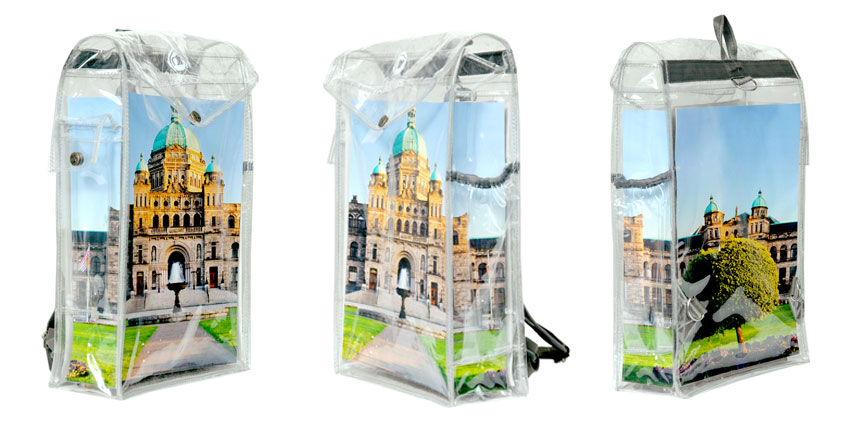
Your overall appearance bespeaks the dignity corresponding to the depth of your character. When you travel, your backpack is the part of your comprehensive appearance and you shall not compromise with it. Not when you have an Affichi backpack as its appearance can be customized as per your creativity. The process of making a 4-sided backpack customization involves the following steps:
Select and edit the image of your choice in the Affichi App with its abundant tools.
The dimension of the 4-sided design of Affichi Backpack customization will be a width of 24 inches and a height of 13.5 inches.
Preview the image and once you are satisfied, print it, peel it and stick it to make a single large poster.
Now cut out the sides of the backpack of dimension 75 inche width and for front and back sides of the backpack keep the width of 9 inches. Don’t meddle with the height of the poster and keep it as 13.5 inches.
Place it inside the backpack with sequence and your customized backpack is ready.
Your Affichi Backpack no more looks like a transparent plastic. It carries a look that can easily make someone envy upon you. And all this takes nothing but your little effort. Self-power, damn!
The best thing about Affichi Backpack is that you can always change the appearance of your choice. You can change it daily, weekly and absolutely at any random time as per your desire. The process of making a 3-side DIY is pretty simple.
Select the image and edit it inside the AffichiPhotoEditor to perfection using numerous tools provided inside the app.
After landing on Poster Set-Up page, for a 3-sided design, enter the width as 15 inches and height as 13.5 inches.
Print the poster and join them by peeling and sticking together the divisions rendering a single poster of big size.
The final dimension that you need to cut out is 2.75 inches wide for the sides of the backpack and 9.5 inches wide for the front of the backpack. Make sure you don’t fiddle with the height of the poster that is 13.5 inches.
Now put the separated parts of the poster into the backpack on both the sides and front and Bam, there you go with another new guise.
A perfect look of the bag creates a positive ambiance in the environment. You can put your colleagues to jealousy by commuting your journey with a new looking backpack every day.
A simple DIY to change your Affichi backpack’s look from one side includes printing a desired image, design or poster to be put inside the transparent backpack.
You can open the Affichi app and choose the image of your choice from the gallery or click photos using the inbuilt
After selecting the image, edit it according to your choice with a plethora of effects in the integrated AffichiPhotoEditor.
Proceeding further, after editing the image you will land on the poster set-up page where you will have to enter a variable size for the variable look of the backpack.
For one-sided appearance, you need to enter the width of 9 inches and height of 13.5 inches.
If you don’t want the image to be stretched, then you can select “Keep Ratio” which maintains the original image ratio.
Sometimes the “Keep Ratio” option differs from the exact size of the poster for the bag. In that case, try to observe whether the size is approximately near to the size of a backpack or not.
Watch the preview of the poster and if it looks good, then get it printed.
Peel the ends and stick together different papers. You can cut short the papers from the side in order to make them fit in a backpack and simply put it inside your backpack.
There you go with a new appearance of the backpack to flaunt in front of your acquaintances. A fresh look always leaves a good impression on your acquaintances and creates a positive ambiance in your mind.
Subscribe Form
To view the latest update and offer please subscribe here…